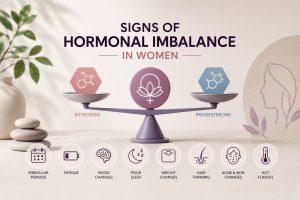
Signs of Hormonal Imbalance in Women: Causes, Symptoms & Wellness Strategies
Hormones are the body’s chemical messengers, regulating essential functions such as metabolism,
Peptides and amino acids are the fundamental building blocks of life. These molecules work together to create proteins and control countless biological processes in living organisms. Understanding these essential components opens the door to exciting research opportunities in laboratories worldwide.
Amino acids are simple chemical molecules that serve as the foundation for all peptides and proteins. Each amino acid contains three key parts: an amino group (-NH₂), a carboxyl group (-COOH), and a unique side chain called an R group. These parts connect to a central carbon atom, creating the basic amino acid structure.
The side chain makes each amino acid special. Some side chains are small and simple, while others are large and complex. This variety gives amino acids different chemical properties and behaviors.
General structure of an amino acid, showing the amine, carboxyl, and variable R groups.
Scientists recognize twenty standard amino acids that appear in natural proteins. These amino acids fall into several groups based on their chemical properties:
| Name | Three Letter | One Letter | Molecular Weight | Side Chain Type | pKa Side_Chain | Essential |
|---|---|---|---|---|---|---|
| Alanine | Ala | A | 89.1 | Hydrophobic (aliphatic) | N/A | No |
| Arginine | Arg | R | 174.2 | Positively charged | 12.48 | Yes |
| Asparagine | Asn | N | 132.1 | Polar neutral | N/A | No |
| Aspartic acid | Asp | D | 133.1 | Negatively charged | 3.86 | No |
| Cysteine | Cys | C | 121.0 | Polar neutral (sulfur) | 8.33 | No |
| Glutamic acid | Glu | E | 147.1 | Negatively charged | 4.25 | No |
| Glutamine | Gln | Q | 146.1 | Polar neutral | N/A | No |
| Glycine | Gly | G | 75.1 | Unique (simple) | N/A | No |
| Histidine | His | H | 155.2 | Positively charged | 6.0 | Yes |
| Isoleucine | Ile | I | 131.2 | Hydrophobic (aliphatic) | N/A | Yes |
| Leucine | Leu | L | 131.2 | Hydrophobic (aliphatic) | N/A | Yes |
| Lysine | Lys | K | 146.2 | Positively charged | 10.53 | Yes |
| Methionine | Met | M | 149.2 | Hydrophobic (aliphatic) | N/A | Yes |
| Phenylalanine | Phe | F | 165.2 | Hydrophobic (aromatic) | N/A | Yes |
| Proline | Pro | P | 115.1 | Unique (cyclic) | N/A | No |
| Serine | Ser | S | 105.1 | Polar neutral | N/A | No |
| Threonine | Thr | T | 119.1 | Polar neutral | N/A | Yes |
| Tryptophan | Trp | W | 204.2 | Hydrophobic (aromatic) | N/A | Yes |
| Tyrosine | Tyr | Y | 181.2 | Hydrophobic (aromatic) | 10.07 | No |
| Valine | Val | V | 117.1 | Hydrophobic (aliphatic) | N/A | Yes |
Researchers use two main systems to represent amino acids in scientific work. The single-letter code assigns each amino acid one letter (like A for alanine or G for glycine). The three-letter system uses abbreviations (like Ala for alanine or Gly for glycine). Both systems help scientists communicate clearly about protein sequences.
A peptide forms when two or more amino acids link together through special connections called peptide bonds. These bonds create chains of amino acids that can be short or long. The process removes water molecules as the amino acids connect, forming stable links between them.
All peptides have two distinct ends. The N-terminal end has a free amino group, while the C-terminal end has a free carboxyl group. This directional nature is important for how peptides function in biological systems.
Scientists classify peptides based on how many amino acids they contain:
Short peptides often have specific biological functions. For example, some act as hormones or signaling molecules that tell cells what to do.
Hormones are the body’s chemical messengers, regulating essential functions such as metabolism,
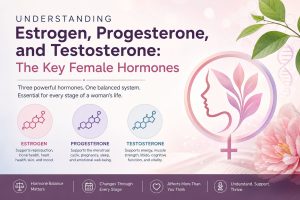
Hormones are the body’s chemical messengers, helping different organs and systems communicate
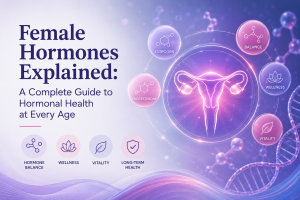
Hormones influence nearly every aspect of a woman’s health, from energy levels
Peptide purification is a critical step in research that ensures your peptides